

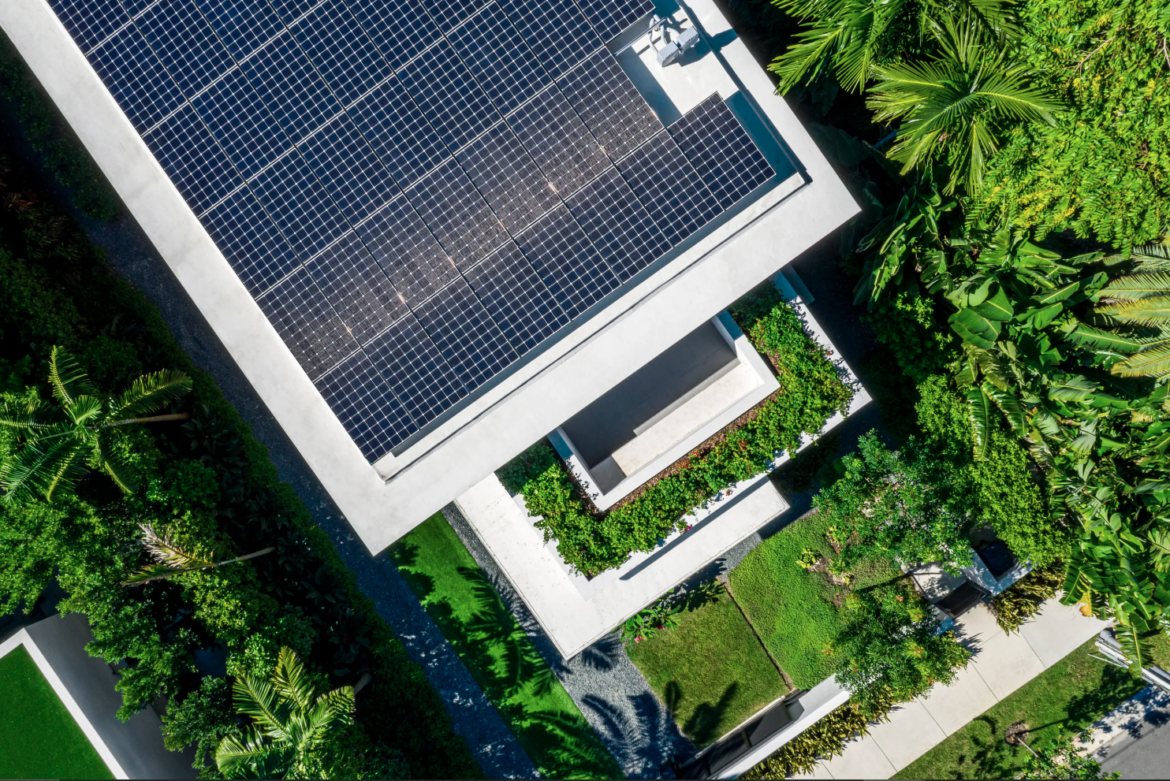
Hello World! For much of architectural history, sustainability was treated as an add-on, a feature to be considered after form, budget, and schedule were already defined. Today, that mindset is no longer viable. Climate realities, rising energy costs, evolving regulations, and client expectations have reshaped what responsible architecture looks like.
Sustainable architecture is no longer a niche or a trend. It is a baseline expectation, a professional responsibility, and an opportunity to create buildings that perform better for people, communities, and the environment.
At Imaraé, we see sustainability not as a constraint, but as a design driver, one that leads to smarter decisions, stronger outcomes, and long-term value.
The Built Environment’s Role in a Changing World
The built environment has a measurable and significant impact on the planet. Buildings account for a large portion of global energy use and carbon emissions, largely due to heating, cooling, lighting, and material production. These facts are well established across industry research and international climate studies.
What this means for architecture is clear:
design decisions made early in a project have lasting environmental consequences.
Orientation, massing, envelope performance, material selection, and systems coordination determine how a building will perform not just at completion, but for decades to come. Sustainability is not something that can be “fixed later.” It must be embedded from the beginning.
Sustainability Is About Performance, Not Just Materials
One of the most common misconceptions about sustainable architecture is that it is primarily about selecting “green” materials. While material choice matters, true sustainability goes far beyond product selection.
It includes:
- How a building is positioned on its site
- How daylight is captured and controlled
- How heat is gained, retained, or rejected
- How spaces are naturally ventilated
- How efficiently systems operate over time
A well-designed building that reduces energy demand through passive strategies will almost always outperform a poorly designed building filled with high-tech systems. Sustainable architecture starts with design intelligence, not checklists.
Long-Term Value for Clients and Owners
Sustainability is often discussed in environmental terms, but it is equally a matter of long-term value.
Energy-efficient buildings typically result in:
- Lower operational costs
- Reduced exposure to energy price volatility
- Increased asset resilience
- Stronger market appeal over time
Clients are increasingly aware that upfront design decisions affect lifecycle costs. A building that performs efficiently, adapts to future needs, and meets evolving standards protects investment far better than one designed only to meet minimum requirements.
At Imaraé, sustainability is closely tied to informed decision-making, ensuring that clients understand not just what a building looks like, but how it will perform over its lifespan.
Health, Comfort, and Human Experience
Sustainable architecture is not only about environmental metrics. It is deeply connected to human health and well-being.
Access to natural light, thermal comfort, indoor air quality, acoustics, and material choices all influence how people experience a space. Numerous studies have shown that well-designed environments can improve productivity, comfort, and overall quality of life.
When sustainability is integrated thoughtfully, buildings become healthier places to live, work, and gather. This human-centered outcome is one of the most powerful reasons sustainability is essential, not optional.
Regulations Are Catching Up to Reality
Across many regions, building codes and planning policies are evolving to address environmental performance. Energy standards are becoming more stringent, and sustainability requirements are increasingly embedded in approvals, financing, and insurance considerations.
Designing with sustainability in mind is no longer just proactive, it is pragmatic. Projects that anticipate future standards are less likely to face costly retrofits, delays, or compliance challenges later.
Architects play a critical role here, translating regulatory requirements into coherent, well-integrated design solutions rather than reactive compromises.
The Importance of Early Design Decisions
Sustainable outcomes are largely determined in the early phases of a project. Choices about form, orientation, and spatial organization have far greater impact than late-stage adjustments.
This is where design process matters.
At Imaraé, sustainability is addressed from concept through documentation. By developing projects in data-rich design environments and extending them into experiential tools, we are able to evaluate performance, daylight, and spatial quality early, when change is both possible and cost-effective.
Sustainability is most effective when it is designed, not added.
Technology as a Tool for Better Sustainability
Advances in architectural technology have made it easier to test and understand building performance before construction begins. Visualization, simulation, and coordination tools allow design teams and clients to see the implications of their choices clearly.
These tools do not replace architectural judgment, but they support better conversations, clearer trade-offs, and more confident decisions. When sustainability is visible and understandable, it becomes a shared goal rather than a hidden technical exercise.
A Responsibility to the Future
Architecture has always shaped how people live, interact, and experience the world. Today, it also shapes how responsibly we use resources and how resilient our communities will be in the years ahead.
Sustainable architecture is not about perfection. It is about intention, accountability, and continuous improvement. It is about designing buildings that respond to their context, respect resources, and serve people well over time.
At Imaraé, we believe sustainability is inseparable from good design. It is not a limitation, it is an opportunity to create architecture that is thoughtful, enduring, and meaningful.
Conclusion
Sustainable architecture is no longer optional because the challenges we face are no longer abstract. Environmental impact, energy performance, human health, and long-term value are now central to every project conversation.
The role of the architect is evolving, from creating form alone to shaping systems, experiences, and outcomes that extend far beyond the building itself.
When sustainability is integrated with design intelligence, collaboration, and clarity, architecture becomes not just responsive to the present, but responsible to the future.
And that responsibility is now essential.
Author – Jenna Van Wyk
Jan of 2026
Leave a Reply